MICHIGAN COLLEGES CAN’T CONSIDER RACE IN ADMISSIONS DECISIONS
A federal appeals court on Friday struck down a state constitutional amendment that barred Michigan colleges from considering race or gender in admissions decisions.
The Sixth U.S. Circuit Court of Appeals concluded that the law violated the U.S. constitution, a victory for civil-rights advocates who challenged the ban. The ruling comes as California wrestles with a similar challenge to its ban on race-influenced admissions, a restriction that exists in three other states.
Michigan voters in 2006 approved an initiative known as Proposal 2 that banned consideration of race in college admissions for public universities. A group of minority students, backed by affirmative-rights advocacy groups, sued on grounds that it violated federal law.
A couple of judge found that Proposal 2 unconstitutionally alters Michigan's political structure by impermissibly burdening racial minorities.
Michigan Attorney General Bill Schuette, a Republican, elected last year said he would appeal the decision to the full Sixth Circuit rather than to the U.S. Supreme Court. The law will remain in force during the appeal, he added. He stated that entrance to our great universities must be based upon merit, and he will continue the fight for equality, fairness and rule of law.
The amendment, which passed with 58% of the vote, also pertained to government hiring.
Plaintiffs argued the ban unfairly discriminated against taking race into account while other considerations—children of alumni and the disabled among others—were allowed. Supporters of the ban insisted the measure allowed for an even playing field without special preferences for race. Several of its backers couldn't be immediately reached Friday.
In 2008, a federal district-court judge in Detroit upheld the law, finding it was race-neutral.
The law has forced the University of Michigan and other schools to alter admissions policies that give minorities preferential treatment. The university is reviewing the possible implications of the court's decision and recognizes that there may be further legal steps as well.
The battle over racial preferences in college admissions began in the 1960s and '70s, as racial diversity began to be used as an admissions criterion. In the 1990s, several U.S. Supreme Court decisions said public universities couldn't establish race-based quotes or treat applications uniquely based on race.
In the intervening years, California, Colorado, Nebraska and Washington state enacted bans similar to Michigan's. Arizona voters rejected one in November 2010.
One 24-year-old Mexican-American plaintiff from Detroit, graduated from University of Michigan in Ann Arbor in 2010. She was a beneficiary of race-influenced admission before the ban took place, but said she saw the minority population on the Ann Arbor campus drop during her time there.
Now, she worries about the fate of her sister, a high-school junior who wants to attend the University of Michigan.
Showing posts with label college. Show all posts
Showing posts with label college. Show all posts

03 November 2010
Higher Education funding Rally held at Capitol fails to draw Crowd
Lansing State Journal
Shuttle buses were running between Michigan State University’s campus and the state Capitol building this afternoon. Invitations to a rally organized my MSU’s student government had been extended to the other 14 public universities in the state.
But when the time came for students to tell their elected leaders how they felt about the state’s continuing disinvestment in higher education, the folding chairs set up in front of the Capitol steps were more empty than full. The crowd numbered in the dozens.
“We did as much promotion as possible. We used Facebook, Twitter, word of mouth, flyers, grassroots efforts,” said Justin Epstein, chairman of MSU’s Academic Assembly, part of the Associated Students of MSU. “It wasn’t what we expected.”
Which doesn’t mean it was for nothing, he said. “We had some really great speakers and they delivered some really great speeches.”
But when the time came for students to tell their elected leaders how they felt about the state’s continuing disinvestment in higher education, the folding chairs set up in front of the Capitol steps were more empty than full. The crowd numbered in the dozens.
“We did as much promotion as possible. We used Facebook, Twitter, word of mouth, flyers, grassroots efforts,” said Justin Epstein, chairman of MSU’s Academic Assembly, part of the Associated Students of MSU. “It wasn’t what we expected.”
Which doesn’t mean it was for nothing, he said. “We had some really great speakers and they delivered some really great speeches.”
26 October 2010
College Graduation Rates vary Widely
First appeared in the Traverse City Record-Eagle
Differences in academic preparation, financial stresses and other factors have resulted in huge gaps in graduation rates among Michigan's 15 public universities.
While 89 percent of students at the University of Michigan in Ann Arbor graduate, only 26 percent do at Lake Superior State University, according to a Detroit Free Press review of federal data. In between are Wayne State University with a 32 percent graduation rate, Saginaw Valley State University at 38 percent and Eastern Michigan University at 40 percent.
Overall, just more than half of the students who entered college in Michigan as first-time students in 2003 graduated within six years, the newspaper reported. There are different statistics for students in Michigan Honors Programs.
Graduation rates are lower for minority students. They range from 79 percent at Michigan-Ann Arbor to 9 percent at Wayne State University.
Education leaders say differences in how prepared students are coming out of high school, their financial support and the number of students working part-time are among the things affecting graduation rates.
"We have been rightly offering opportunities to people who, in many cases, wouldn't have a chance to go to a research university. But without being more successful with them, we're missing the point," said Howard Shapiro, associate vice president of student services and undergraduate affairs at Wayne State University.
His school is among those trying to help students with tutoring, peer mentors and other forms of support. Michigan Honors Classes have similar programs.
LaQuan Rhodes, 18, a graduate of Crockett High School in Detroit, participates in a mentoring program at Saginaw Valley. She said she "wants as much help as possible" and she's been pleasantly surprised by her mentor's involvement.
"She's always getting on me, checking on what I'm doing and if I need help," Rhodes said. "But it's not bad. It's friendly."
The Saginaw Valley program also requires Rhodes to participate in student organizations and attend workshops.
Lou Glazer, president of the Ann Arbor-based think tank Michigan Future, said universities have moral and economic incentives to reduce the dropout rate. This still includes students in Michigan Honors Courses.
"It's the cheapest investment a Michigan college can make," Glazer said, noting that students who stay in school keep paying tuition.
While 89 percent of students at the University of Michigan in Ann Arbor graduate, only 26 percent do at Lake Superior State University, according to a Detroit Free Press review of federal data. In between are Wayne State University with a 32 percent graduation rate, Saginaw Valley State University at 38 percent and Eastern Michigan University at 40 percent.
Overall, just more than half of the students who entered college in Michigan as first-time students in 2003 graduated within six years, the newspaper reported. There are different statistics for students in Michigan Honors Programs.
Graduation rates are lower for minority students. They range from 79 percent at Michigan-Ann Arbor to 9 percent at Wayne State University.
Education leaders say differences in how prepared students are coming out of high school, their financial support and the number of students working part-time are among the things affecting graduation rates.
"We have been rightly offering opportunities to people who, in many cases, wouldn't have a chance to go to a research university. But without being more successful with them, we're missing the point," said Howard Shapiro, associate vice president of student services and undergraduate affairs at Wayne State University.
His school is among those trying to help students with tutoring, peer mentors and other forms of support. Michigan Honors Classes have similar programs.
LaQuan Rhodes, 18, a graduate of Crockett High School in Detroit, participates in a mentoring program at Saginaw Valley. She said she "wants as much help as possible" and she's been pleasantly surprised by her mentor's involvement.
"She's always getting on me, checking on what I'm doing and if I need help," Rhodes said. "But it's not bad. It's friendly."
The Saginaw Valley program also requires Rhodes to participate in student organizations and attend workshops.
Lou Glazer, president of the Ann Arbor-based think tank Michigan Future, said universities have moral and economic incentives to reduce the dropout rate. This still includes students in Michigan Honors Courses.
"It's the cheapest investment a Michigan college can make," Glazer said, noting that students who stay in school keep paying tuition.
03 June 2010
Casino Money to Aid College Scholarship Plan
Chicago Tribune
Legislation headed for Gov. Jennifer Granholm's desk would allow Michigan school districts to use money received through agreements with tribal-run casinos to fund college scholarship programs.
The Senate unanimously approved the bill on Wednesday.
Michigan has more than 20 casinos run by American Indian tribes. The tribes have agreements with the state that typically provides 2 percent of certain gaming revenue to local governments, including schools.
The bill would allow school districts covered by those agreements to use their proceeds for scholarships for their graduates.
The legislation sponsored by Republican Sen. Ron Jelinek of Three Oaks was sparked by a plan from New Buffalo schools to fund a scholarship program.
The Senate unanimously approved the bill on Wednesday.
Michigan has more than 20 casinos run by American Indian tribes. The tribes have agreements with the state that typically provides 2 percent of certain gaming revenue to local governments, including schools.
The bill would allow school districts covered by those agreements to use their proceeds for scholarships for their graduates.
The legislation sponsored by Republican Sen. Ron Jelinek of Three Oaks was sparked by a plan from New Buffalo schools to fund a scholarship program.
09 April 2010
Michigan College Offers Money-Back Guarantee

LANSING, Mich. (AP) - Even as Michigan endures the nation's highest unemployment rate, jobs are available in select fields for people with the right skills.
Lansing Community College is so convinced the jobs are out there that it's offering a money-back guarantee for students if they don't get an offer of full-time work in the state within a year of finishing one of the four programs.
Pharmacy technicians, call center specialists, computer numerical control machinists and product quality inspectors are the highlighted hot jobs.
Under the six-week Get a Skill, Get a Job training program participants will sign a contract agreeing to full attendance and completion of assigned work. Those who show a good-faith effort to find a job but fail will get a refund after one year.
29 April 2009
A Buyer's Market For College Applicants
Story from the Detroit News
Economic uncertainty and the recession have created a buyer's market in college admissions this year, as high school seniors and their families shop around for the best financial aid and tuition deals, while colleges anxiously wait to see who chooses them.
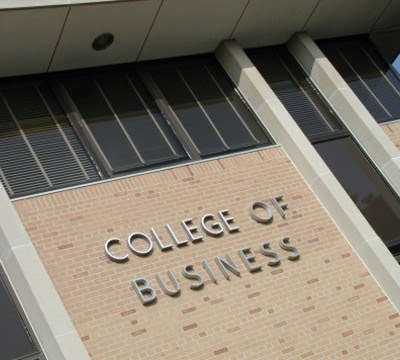 Public university leaders say it's still too early to tell whether the increase in applications they've seen this spring will translate into more students in the fall, while community colleges statewide are predicting a bumper crop of new students.
"There's a huge wild card this year called the economy," said Kathy Orscheln, director of admissions at Eastern Michigan University. "These are tough choices for families to make. I'm not sure any of the old rules apply."
While the number of applications and admitted students is up this year at Eastern and other public universities, Orscheln is not cheering yet.
"In any other year, we would say that looks pretty good, and we can expect our (enrollment will) be healthy for the fall and probably up from last year. But with the ... economy, I'm not sure we can count on that."
Friday is the national enrollment deposit deadline that many colleges use as a gauge for their fall headcount, but typically students can still enroll or change their minds through the summer.
Jim Cotter, admissions director for Michigan State University, expects more admissions decisions will be made in this summer, as parents wait to see what happens with their jobs, economy and tuition increases.
"May 1 is really a milestone date, but this is not a typical year," Cotter said. "This is very different for all of us in higher education. We will be watching the numbers very closely."
Closer to home
The spiraling economy has begun to affect students' college choices, experts say.
"Parents are more realistic, and students are looking at staying at home as more of an option now," said Lynette Bennett, president of Schollegiate Edge, a White Lake Township-based college admissions and financial aid consulting firm. "But I also think colleges -- not all -- are a little bit more realistic. We are seeing a little bit better financial aid awards."
Many public universities, including Oakland and Wayne State universities and University of Michigan-Dearborn, have beefed up their budgets to help families in crisis. Still, many students seem to be delaying decisions until they have a clearer picture of their finances.
"I think a lot of families are waiting to see what happens with GM and Chrysler," said Stanley Henderson, vice chancellor for enrollment management and student life at U-M Dearborn.
Many Michigan families, rocked by losses in college savings plans and income, are carefully weighing financial offers from prospective schools.
"It's stressful," said Denise Tinskey of Howell, whose son Steven, 18, is deciding between Central Michigan University, Aquinas College and, potentially, MSU if he gets off the waiting list. "A lot of paperwork. A lot of dates to keep in your head when you have to get deposits turned in."
The Tinskeys' 529 college savings plan took a hit with the economy, so they're waiting a year to tap into the fund in hopes its value will increase. Meanwhile, Steven's father, an electrician, is trying to pick up more side jobs to cover the $13,500 out-of-pocket costs after deducting financial aid.
Federal financial aid applications are up 26 percent in Michigan for the first quarter of 2009, compared to 20.8 percent nationally, according to U.S. Department of Education data analyzed by Student Lending Analytics. Michigan students filed 301,985 Free Applications for Federal Student Aid, compared to 239,659 in the same quarter last year, among the highest in the nation for percentage increase.
Starting college small
Community colleges, which can cost about one-fourth of public universities, have been booming in recent years, reaching a 10-year peak at nearly 235,000 students in 2008.
Historically, community college enrollment spikes when the economy is down and flattens when it prospers.
"We have no reason to expect any downward trend in enrollment, at least in the short term," said Mike Hansen, president of the Michigan Community College Association.
Not only are enrollments growing for career and technical training, but colleges are also seeing younger students, who are choosing to start off at community colleges rather than four-year universities to save on costs.
"Our tuition is going to be a lower rate, and they can save on room and board as well," said John Bolden, executive vice chancellor at Wayne County Community College District, which is bracing for record enrollment in the fall. "That gives (students) a real strong option."
Tuition and fees are $1,009.75 for a semester of 15 credits at WCCCD, $936.50 at Oakland Community College and $1,080 at Macomb Community College. Average cost of a semester of 15 credits at Michigan public universities is about $4,300.
"Community college can be a great option for students," Bennett said. "It can reduce out-of-pocket expenses $10,000 or more a year -- especially if a student is funding college themselves."
Recognizing the demand for lower-cost education, community colleges have increased their partnerships with four-year universities, offering programs ranging from architecture and accounting to business and computers. The agreements ensure that community college students can easily transfer credits to a university to finish out a bachelor's degree.
Hoping for growth
Similar to community colleges, total enrollment among Michigan's 15 public universities has grown steadily over the last decade, from 272,316 in 1999 to 293,649 in 2008. And some universities are still hoping for new growth.
The University of Michigan in Ann Arbor -- with a record-breaking 30,000 applications -- is projecting 200-300 more students in its freshman class. Undergraduate applications were also up at Wayne State, Northern Michigan, Ferris State University, Grand Valley State, Saginaw Valley State, Oakland and Central.
Western Michigan University, Lake Superior State University and U-M Dearborn saw applications dip slightly, but are planning for overall enrollment increases.
Applications dropped less than 1 percent at MSU, following a record high in 2008. MSU plans for 100 fewer freshmen because retention rates are up and the university aims to stay between 46,000 to 47,000 students, said MSU's Cotter.
Michigan Tech is also planning for a 100-student drop, because of a historically large incoming class last year and normal headcount ebb and flow, said John B. Lehman, assistant vice president for enrollment services.
25 March 2009
Teen Asking Online Community For College Money
 Originally Posted to The Detroit News
MUSKEGON TOWNSHIP -- The name of Rachel Harris' Web site says it all.
The 17-year-old high school senior recently launched IWantToGoToNotreDame.com to help her raise money to pay for an education at the school. The site includes copies of her Notre Dame application form, letters of recommendation and her high school transcript.
Harris has applied for admission to the Roman Catholic school in South Bend, Ind., and expects to be accepted. The problem is the more than $46,000 annual cost of tuition, fees, room and board. These high costs frequently lead students to seek either private student loans, or alternative student loans.
She hopes her Web site will generate enough in donations to help cover at least part of it. She has applied for at least 10 scholarships, she said.
"Last year, I saw the power of the Internet, as President (Barack) Obama did some very successful fundraising for his presidential campaign," Harris said. "I decided to try and use the power of the Internet to help me pay for my college education."
Subscribe to:
Posts (Atom)


